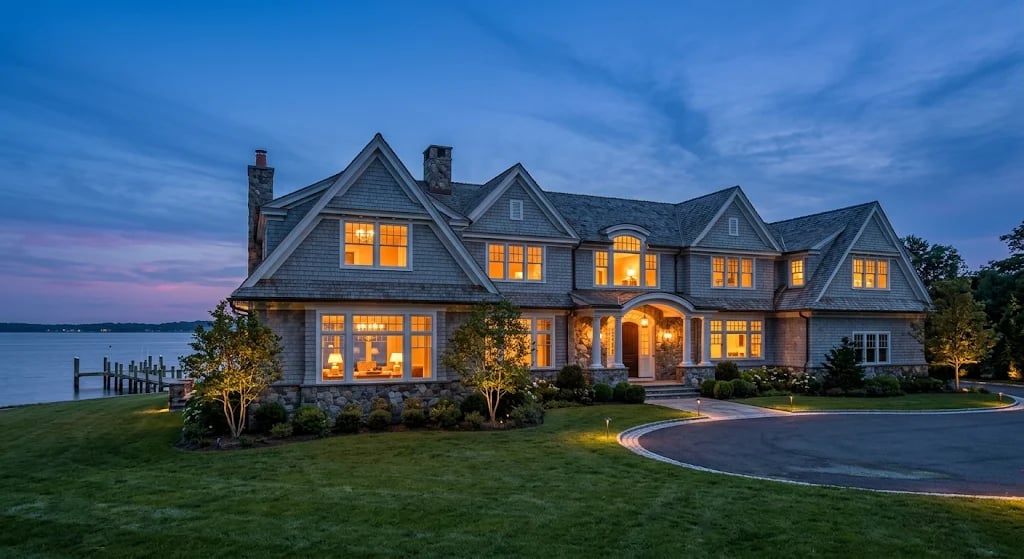
A 6,000-square-foot house on the Sound does not sip energy. The heating plant fights January wind, the cooling system runs hard from June through September, and the pool pump rarely rests. Add it up and the monthly statement can look like a second mortgage payment.
You can shrink that number without touching the finishes you paid for. An energy-efficient home keeps the same floor plan, the same millwork, and the same water view. What changes is how much fuel and electricity it takes to stay comfortable. The right energy-efficient upgrades lower heating costs in CT, ease the summer cooling load, and reduce utility bills year after year.
Two questions come up again and again: how can I make my Connecticut home more energy efficient, and do energy-efficient upgrades increase home value in CT? Both get answers below. The short version: seal the building shell first, improve HVAC efficiency second, add smart thermostats third, then choose the green upgrades for luxury homes that suit your property. Follow that order and luxury home energy savings can show up on the bill and in how buyers see the house.
Start With a Home Energy Assessmen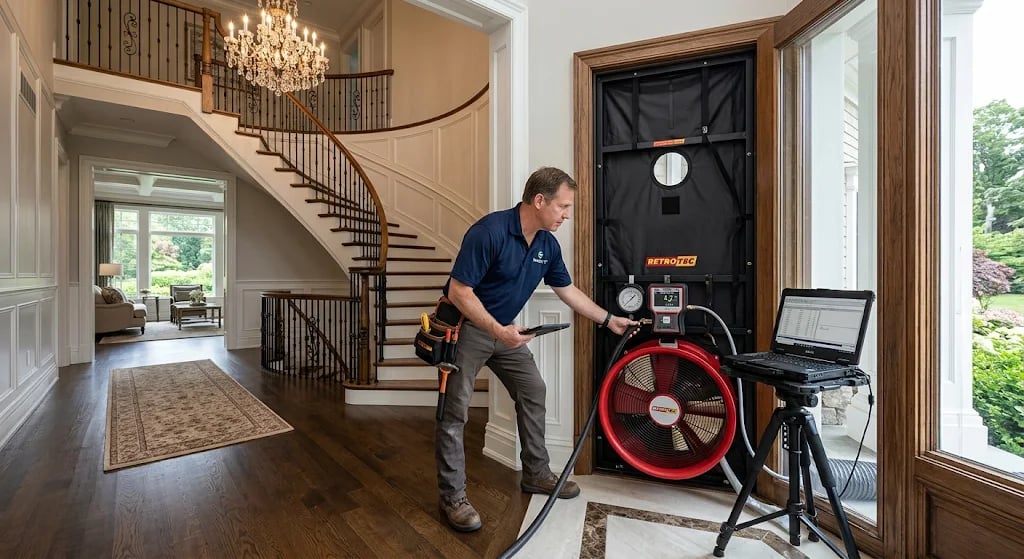
Before you price any equipment, book an assessment. An auditor walks the house with a blower door and an infrared camera, finds where conditioned air escapes, and ranks the fixes by payback. Energize CT, the state's energy efficiency program, offers home energy assessments to Connecticut homeowners. Ask about current pricing and which follow-up measures carry rebates, since incentives change.
Big houses hide problems that small ones don't. A 1990s addition tied into a 1930s core, a finished attic over the garage, a wing that never matches the rest of the house for temperature: auditors flag these first. If you own one of the Westport homes with decades of layered renovations, or one of the Stamford homes closer to the water, the assessment shows you where your first dollar goes.
Seal and Insulate to Lower Heating Costs in CT
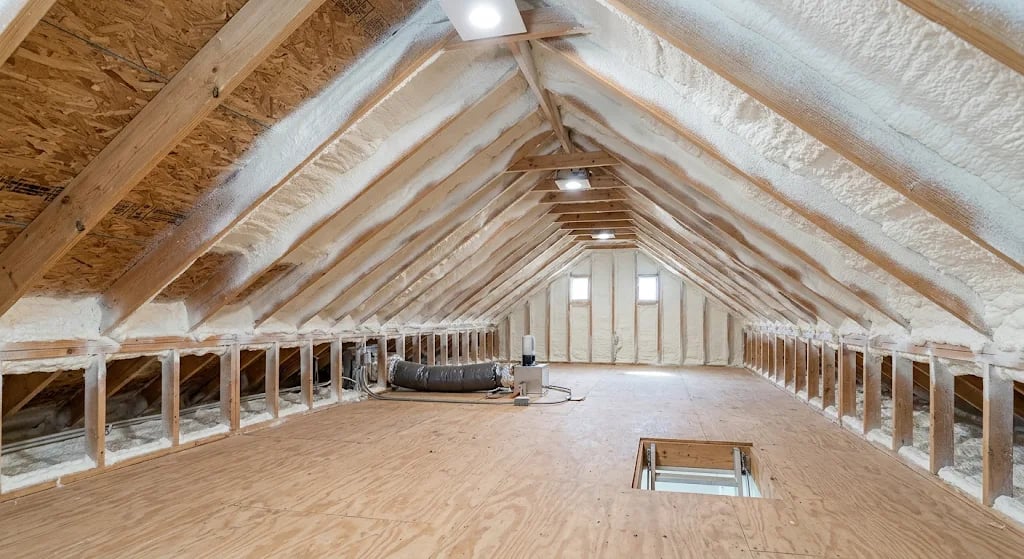
Mechanical upgrades get the attention, but the building shell decides how hard those systems work. On a house with vaulted ceilings, long exterior walls, and several additions, a leaky envelope is where heating dollars disappear, and those dollars cost more this year if you burn oil.
In October 2026, the U.S. Energy Information Administration (EIA) forecast that oil-heated households will spend about 21 percent more this winter than last, with heating oil prices averaging 34 percent higher. Oil heats only about 3 percent of U.S. homes, but most of those homes sit in the Northeast. EIA also expects homes heated with electricity to pay about 4 percent more, while natural gas homes spend about 9 percent less. A warmer Northeast winter, which EIA also forecasts, offsets part of the oil increase.
Start at the top and bottom of the house. Warm air rises and escapes through the attic floor, so sealing and added insulation up there pay off fastest. Next come the basement rim joists, recessed lights, and the gaps around chimneys and plumbing. Windows come after, and they call for judgment. In older neighborhoods, high-performance replacements or interior storm windows can cut drafts while keeping the original look.
If a home renovation is already on your list, fold this work into the scope. The walls open once, and the insulation, air sealing, and finish carpentry run on a single schedule.
HVAC Efficiency: Heat Pumps, Zoning, and Tune-Ups
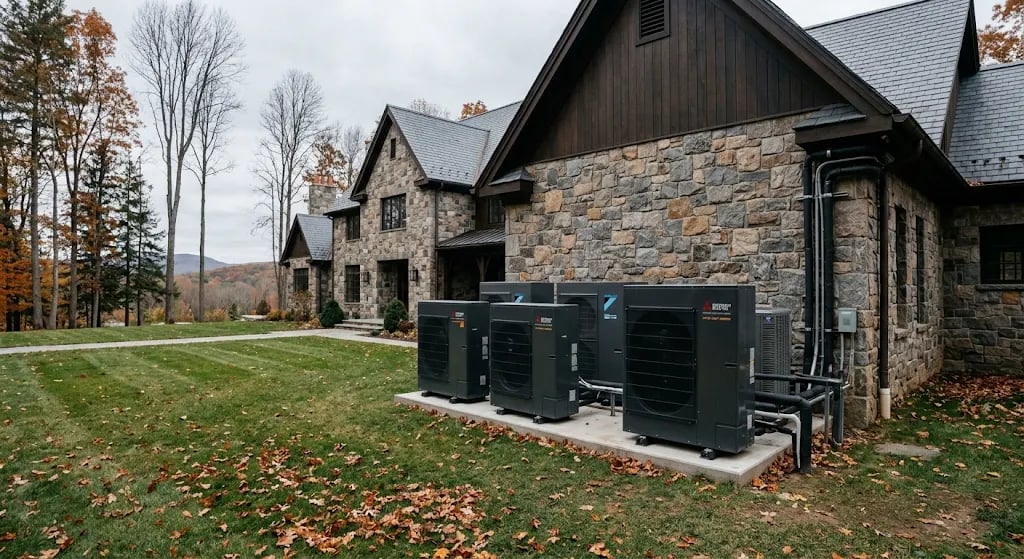
A large house has a lot of conditioned space to heat and cool, so HVAC efficiency is usually where the biggest savings sit, and your current fuel decides which upgrade pays off first. With oil spending forecast to climb the most, oil-fired homes are the ones to price for a high-efficiency boiler or a heat pump conversion.
Cold-climate heat pumps are built for New England winters, and Energize CT lists heat pump incentives. Confirm the current amounts before you sign a contract. Electricity prices belong in the math too. EIA's Connecticut state profile ranks the state third highest in the country for average retail electricity price, at 24.37 cents per kilowatt-hour across all sectors in 2024, the latest full year it lists. Ask your contractor to compare yearly operating costs for your current fuel, whether that's oil, propane, or natural gas, against a heat pump before you decide.
Zoned systems let a guest wing or a third-floor suite sit at setback while the main living areas stay comfortable. Duct leaks, oversized equipment that short-cycles, and skipped annual service all waste energy. A load calculation sizes the new system to the house instead of to the old unit, which prevents oversizing.
Smart Thermostats and Zoned Controls
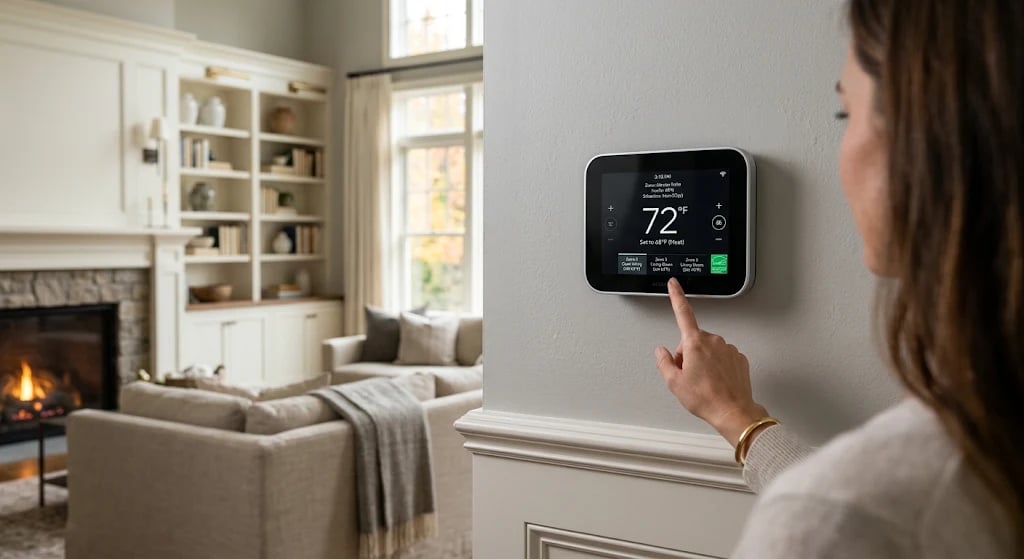
Smart thermostats are the easiest upgrade on this list. ENERGY STAR certifies models based on field data showing they save energy, so look for the label instead of trusting a marketing claim. In a large house, the value comes from scheduling by zone, learning when rooms sit empty, and adjusting remotely. If you keep a second home or travel often, you can set the temperature back while you're away and bring the house up to comfort before you land.
A thermostat will not fix a leaky shell or an oversized furnace, which is why it comes last among the core upgrades. Paired with sealed ducts and a right-sized system, it trims the waste that remains.
Green Upgrades for Luxury Homes Worth Considering
Once the shell and HVAC are settled, the extras make sense. Heat pump water heaters use less electricity than conventional electric tanks. Variable-speed pool pumps run slower and draw less power, and a good cover reduces the load from the biggest accessory on the property. Dimmable LED lighting with automated controls trims the electric load in rooms with dozens of fixtures. Solar paired with battery storage can keep essentials running when a coastal storm takes out the grid, and Connecticut Green Bank runs an Energy Storage Solutions incentive for home batteries.
Financing exists for much of this. The Connecticut Green Bank Smart-E Loan offers low-interest financing with no money down through local lenders and contractors, and more than 90 home improvements qualify. Confirm eligibility for your specific project. According to the IRS, the federal tax credit for home energy improvements covered only property placed in service before the end of 2025, so don't count on it for new work. A tax advisor can confirm what still applies to you.
Do Efficiency Upgrades Increase Home Value in Connecticut?
No one can promise a dollar-for-dollar return, and results vary by upgrade, town, and market. Buyers at this price point often ask for a year of utility bills, ask how old the boiler is, and notice cold rooms and drafty windows during a showing. An energy-efficient home backed by a documented assessment and newer equipment gives your agent concrete points to make, and it takes away objections before an inspection raises them.
Timing matters. If a boiler or air handler is near the end of its life, replacing it before you list means you collect the savings while you live there and carry a stronger story into the sale. Ask a local listing agent which improvements buyers in your town respond to.
Where to Go From Here
Pick one move this month: book the assessment. Its results sort the rest of the list by cost and payback, and you can phase the work over a couple of seasons. A more energy-efficient home costs less to run, feels better room to room, and gives you a clearer story if you list down the road.
If you're planning a project, Howell Homes can help you work these upgrades into the scope while the walls are open.
Frequently Asked Questions
How can I make my Connecticut home more energy efficient?
Start with a professional home energy assessment, then seal air leaks and add insulation, upgrade or tune your HVAC system, and install ENERGY STAR certified smart thermostats. That order puts the highest-impact fixes first and keeps you from buying equipment the house doesn't need.
Do energy efficient upgrades increase home value in CT?
They can help, but no upgrade carries a guaranteed return. Lower operating costs, newer HVAC equipment, and a documented assessment give buyers reasons to prefer a home and reduce pushback after inspection. A local agent can tell you which upgrades buyers in your town value most.
Which upgrades lower heating costs in CT the most?
Air sealing and attic insulation usually come first, followed by a right-sized, high-efficiency heating system such as a cold-climate heat pump or modern boiler, plus zoned controls. An energy assessment ranks them for your specific house. Oil-heated homes have the most to gain, since EIA's October 2026 outlook forecasts oil heating spending rising about 21 percent this winter.
Are there rebates or financing for energy-efficient upgrades in Connecticut?
Yes. Energize CT lists rebates and incentives for items such as insulation and heat pumps, and the Connecticut Green Bank Smart-E Loan offers low-interest financing with no money down. The federal home improvement credit ended for property placed in service after 2025. Amounts and eligibility change, so confirm before you start.
Are smart thermostats worth it in a large home?
Usually, yes, when you choose an ENERGY STAR certified model and pair it with zoned HVAC. The savings come from scheduling and setbacks by zone, so the benefit grows with the size of the house. Results vary with your habits and equipment.